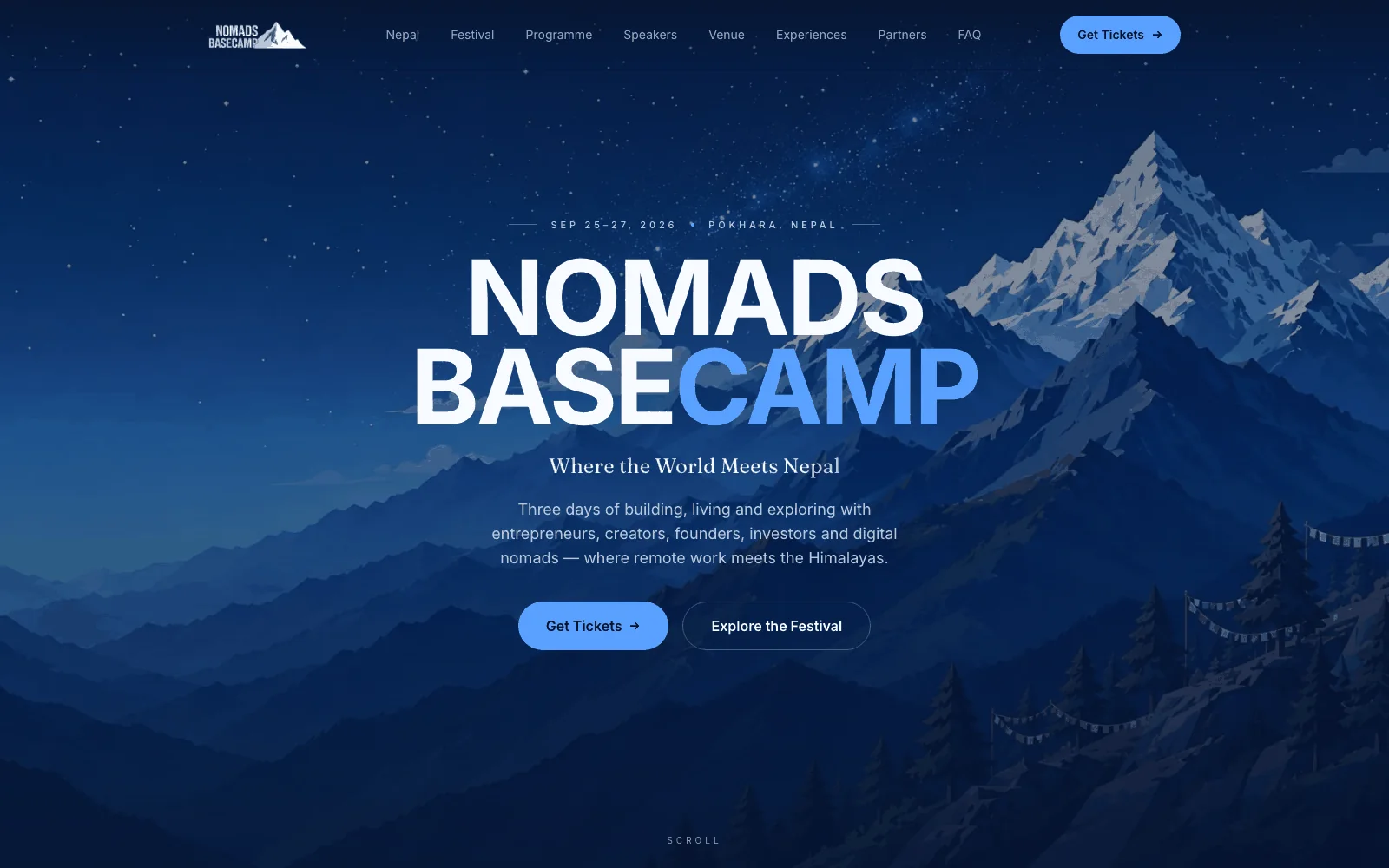
The homepage opens on a full-bleed campaign slot the studio re-points at whatever matters this week — a reveal trailer, a tournament result, a store promotion.
Web Design Development Maintenance
The studio site behind Zero Hour — cinematic enough to sit beside the game art, and built so trailer drops, store launches and tournament results go live the day they happen.
The homepage opens on a full-bleed campaign slot the studio re-points at whatever matters this week — a reveal trailer, a tournament result, a store promotion.
Attrito M7 Productions builds original titles out of Dhaka — Agontuk and Zero Hour — and Zero Hour is a live one. It has been shipping since Early Access in 2020 and has kept moving: onto the Epic Games Store in November 2025, with PlayStation 5 and Xbox Series X|S announced for this Fall.
Around the game runs a constant news cycle: trailer reveals, the Zero Hour Asia Showdown and Bangladesh Open tournaments, price drops, hiring across six departments. A brochure site would have been stale inside a week.
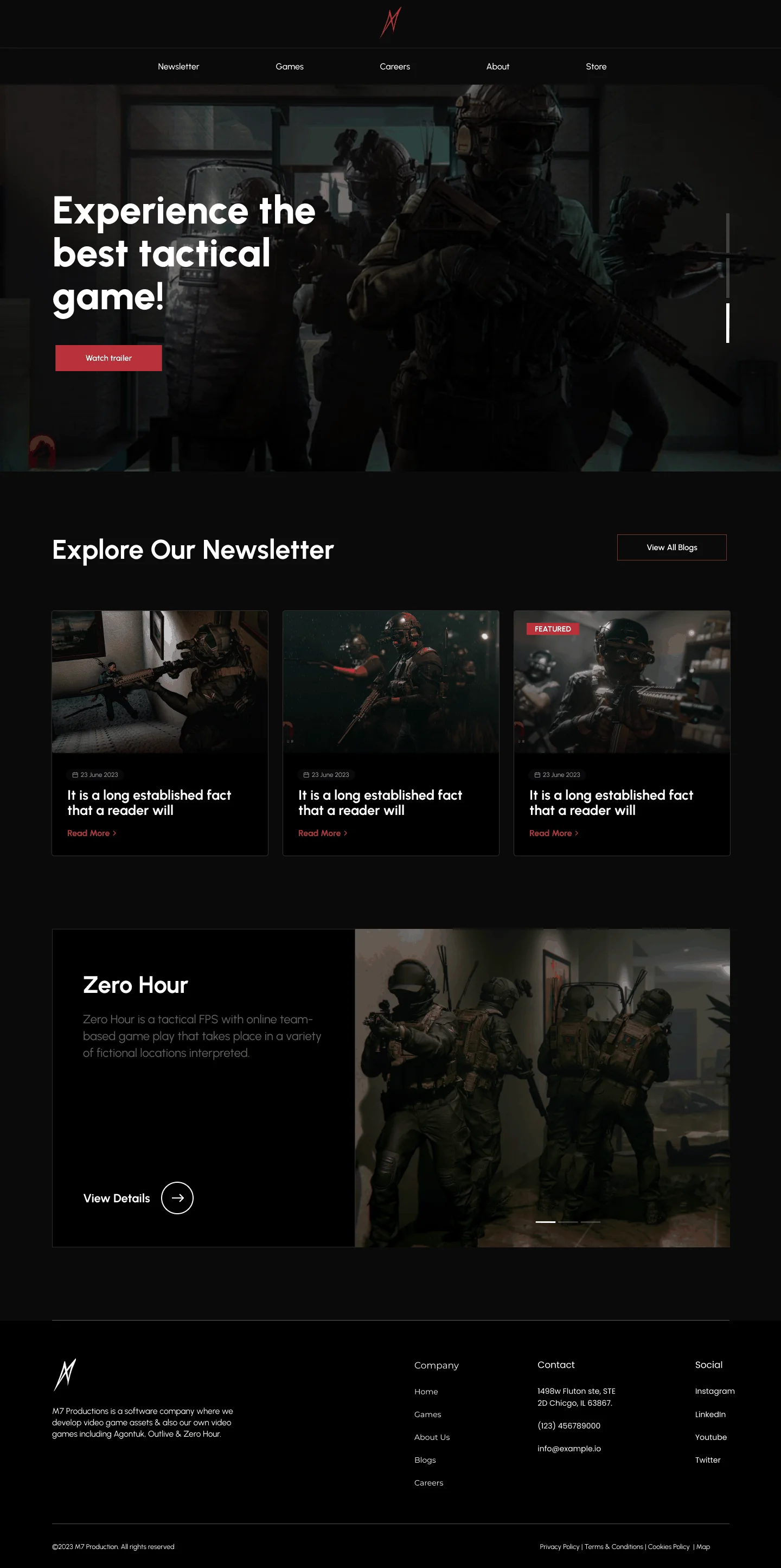
A dark, cinematic build that takes its art direction from the game itself — full-bleed key art, crimson accents, heavy display type — fronted by a campaign carousel the studio re-points at whatever matters this week without touching a template.
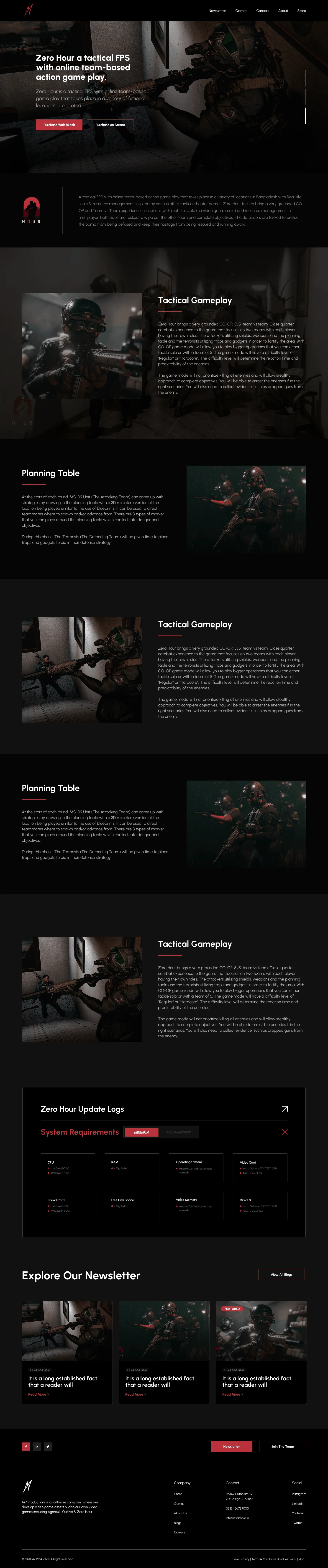
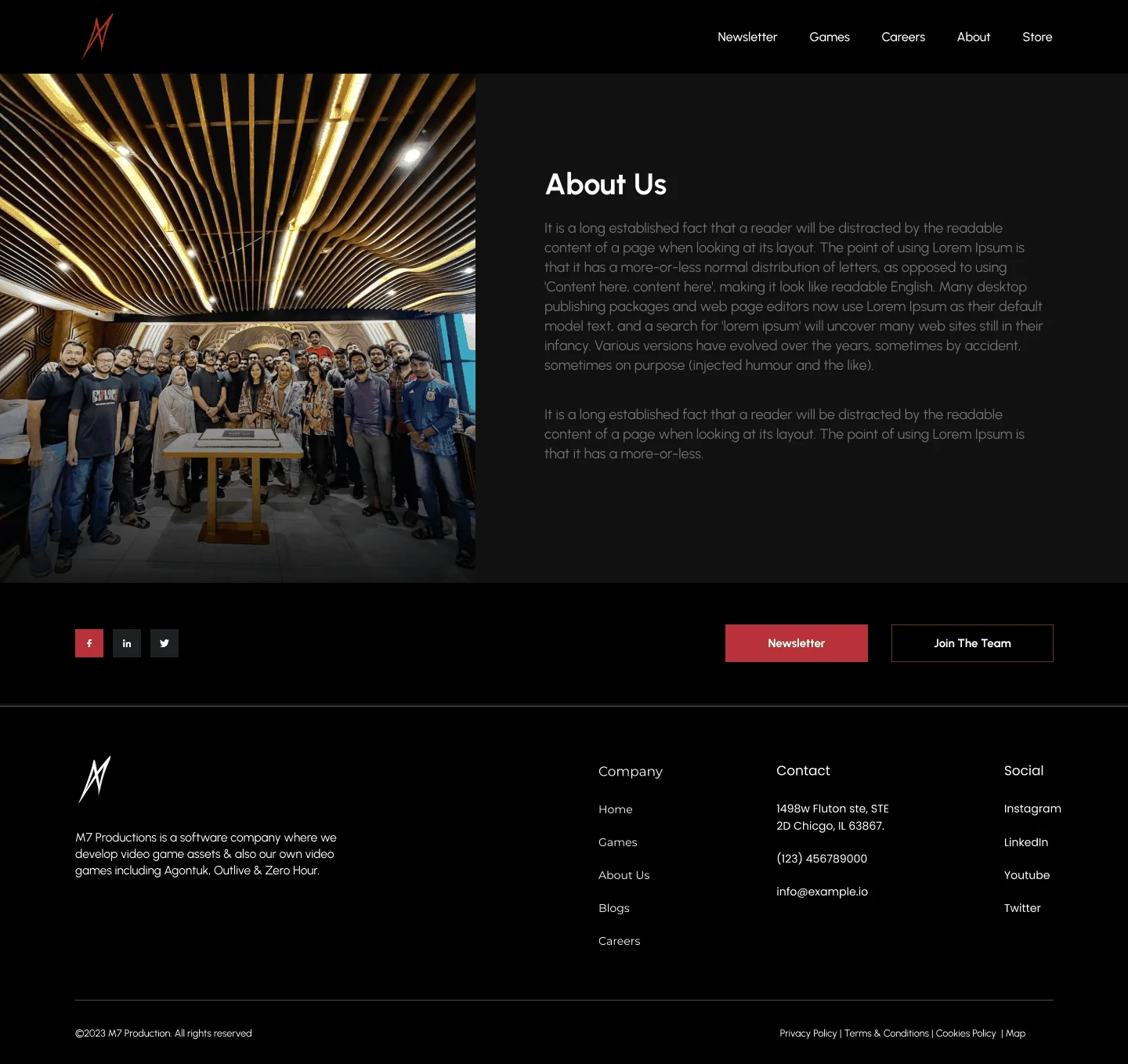
Behind it: a games catalogue with a full game-detail template, a newsletter that now runs to a paginated archive, careers by department, the studio story, and the compliance layer a mature title needs. We stayed on as the maintenance team, so launch days ship same-day.
Dark, cinematic art direction pulled from Zero Hour itself — full-bleed key art, crimson accents, heavy display type — so the site reads as part of the product, not a corporate wrapper.
A campaign carousel the studio re-points at a reveal trailer, a tournament result or a store promotion — no redesign, no developer ticket.
A games index plus a full game-detail template — feature sections, update log, min/recommended system requirements — routing players to Steam, Epic Games Store and the announced console releases.
What started as three featured posts now runs to a paginated archive of reveals, tournaments and launches, published by the studio without a developer in the loop.
storefronts routed from one place — Steam, Epic Games Store, and the announced PlayStation 5 and Xbox Series X|S releases
templates in production, from the campaign carousel to the game-detail page, newsletter archive and careers board
maintained on retainer — reveals, launches and tournament results publish the day they happen
M7 Productions and Attrito Ltd. met in 2015, spent three years on research, began development in 2019, and showcased a game-ready Dhaka at Unite India that year — then released Zero Hour into Early Access in 2020. The site has to carry that decade as credibly as this week’s announcement.
Tell us where the hours go. We’ll map the system and quote a timeline in days — not weeks.